
Phones didn’t ruin restaurants. The tip tablet did.
Restaurants are putting phones in pouches now. You walk in, and before anyone says your name, a host with maybe three months of experience asks you to hand over the device that has your kid's school on it.
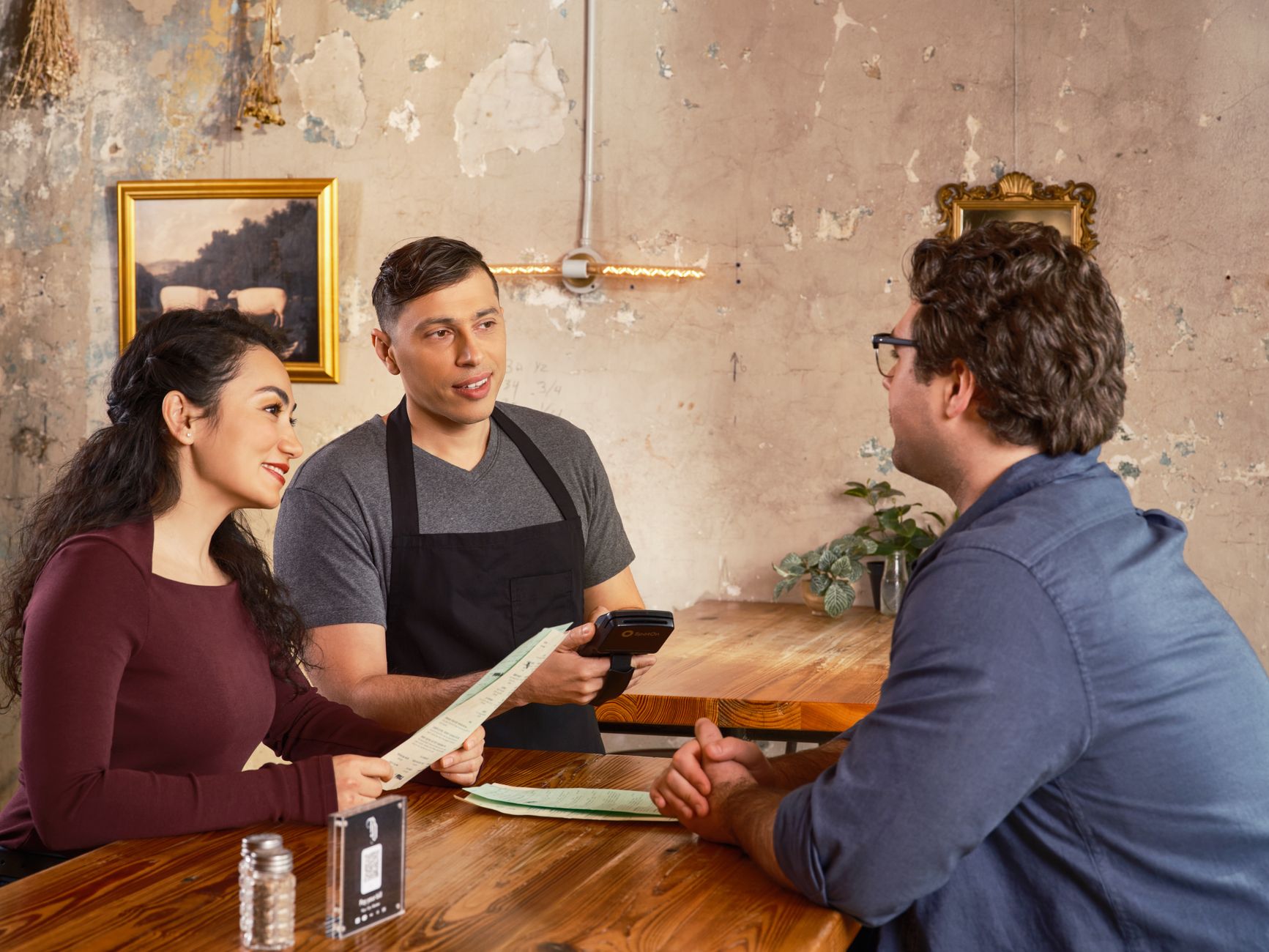
Then ninety minutes later, that same restaurant brings a tablet to your table, spins it toward you, and seven people you came with watch you choose a tip percentage.
One of those is a screen problem. It's not the one everybody is writing about.
I've been in restaurants since I was sixteen. Philadelphia first, working around chefs whose names you'd know, then San Jose, then private clubs on the West Coast, then Seattle. Fifteen years of standing in dining rooms watching what actually makes a night good or bad. So when the phone ban conversation started up again, I had opinions ready.
What hospitality is, before we argue about anything else
Service is what you do. Hospitality is anticipating the need before the guest has it.
That's the whole job. Mr. Smith walks in, and the greeting is "happy anniversary, let me take you to your favorite table." Nobody told him he was getting his table. He didn't ask. Somebody noticed a year ago and wrote it down, and now it's a Tuesday in September and he feels known.
Now run the other version. Mr. Smith walks in and the first sentence out of anyone's mouth is a list of what he can't do.
You've started his night with a no. And you made a nineteen-year-old deliver it.
The enforcement problem nobody plans for
Remember 2020, when we had young hostesses trying to make sixty-year-old men put masks on? Men who would not have asked that same girl for directions to the parkway?
That went badly. It went badly everywhere. And it wasn't a policy problem, it was a training-and-power problem, and the policy just exposed it.
Your phone ban does the exact same thing. If you haven't trained your team to handle the pushback, from a real place, with a real script and real backup from a manager who will walk over, then what you've written is not a rule. It's an ambush you scheduled for your youngest employee.
Where it actually works, and why
There's a bar in Philadelphia called Hop Sing Laundromat. My friend Lee owns it. It's nationally famous, and the no-phone thing there is absolute.
It works. It works beautifully.
Here's why: Lee sets the stage at the door. The whole thing is theater, he greets you himself, and the rule isn't an interruption of the experience, the rule is the experience. You don't stumble into Hop Sing. You go there knowing. People line up for it.
Then there's Green Bank, West Virginia, where the cell towers are effectively off and the town markets itself as a place to disappear. Also extreme. Also works, for the same reason. Nobody drives to Green Bank by accident.
The pattern: it works when the guest chose it. It fails when you sprang it.
And there's a version I love that costs almost nothing. A sign near the door, artfully done, about being present with the people you came with. No pouch. No host confrontation. You've put the decision back in the guest's hands, which is the one move here that doesn't violate what hospitality means.
Now the part nobody is saying
The tip tablet is worse than every phone at the table combined.
A server carries it over mid-conversation. The table goes quiet. Somebody has to figure out who's paying, which is its own small negotiation, and then that person takes the tablet and everybody watches. They watch the screen. They watch the percentages. They watch which one you pick.
It used to be a check in a folder. You left it, and whoever wanted it took it, and maybe that took ten minutes and that was fine. Ten minutes of nobody being reminded that this was a transaction.
I used to be able to hand my card to somebody and keep talking. You can't anymore. Now the meal ends with a device, a decision, and an audience.
So if you're going to tell people to put their phones away in the name of presence, start with the screen you own. The one you bring to the table yourself.
The math nobody wants to hear
Restaurants never had margin. Not before COVID, not after, not now with what wages and food cost.
Seattle specifically is having a hard time filling seats. Philadelphia is booming and can maybe afford an experiment. Most rooms cannot. And if you are already fighting for covers, adding one more thing a guest has to agree to before they sit down is a strange place to spend your goodwill.
I'm not defending the phones, by the way. I think they have hurt high-end cocktail bars, because the bartender is supposed to be the entertainment and it's hard to be the show when everyone's looking down. And I'm as guilty as anyone. I have video of fireworks on my phone that I have watched exactly zero times. Who is that for?
But a societal problem showed up in your dining room. It didn't start there, and a pouch on a podium isn't going to solve it.
What I'd do instead
Train the team, not the guest. Give your staff language for the table that's being loud or filming, and give them a manager who backs them up in the moment. That's four hours of work, one time.
Kill the tip tablet presentation, or at least stop spinning it around. Bring it face down. Leave it. Walk away.
And go find the things that make someone feel noticed. The anniversary. The favorite table. The drink that's already coming because you remembered. People put their phones down on their own when the room is more interesting than the screen.
That's not a policy. That's a standard, and standards are a management problem, which means it's fixable.
I spent fifteen years running rooms like yours, including as the youngest executive at the Columbia Tower Club. Now I walk into other people's dining rooms and say the four things nobody on your payroll can say to you.